

Working from the Tec’s Mexico City campus, ten cities are working on transforming their urban environments to make them more friendly to child development
With the goal of transforming child development in cities through urban planning and design, the Tec’s Mexico City campus became the meeting point for the first edition of Urban95 Academy for Latin America and the Caribbean.
Urban95 Academy is a training program that enables city leaders around the world to learn and develop strategies that make cities better places for babies, children, and their caregivers.
Representatives of ten Latin American cities (Mérida, Mexicali, La Ceja, Medellín, Cuenca, Comuna de Independencia, Puerto Varas, Niterói, Montevideo, and General San Martín) were given a one-week-long, in-person training course to implement their initiatives.
The training course was held seven weeks after the teams took an online executive course taught by professors from Tecnológico de Monterrey and the London School of Economics and Political Science.
These institutions were joined by the Van Leer Foundation, the FEEMSA Foundation, and knowledge partners from the Urban95 region, who became catalysts for shared ideas to improve the early childhood experience in cities.
Making cities friendly
Through Tec’s Center for the Future of Cities, Nélida Escobedo, a professor at the School of Architecture, Art, and Design, opened the doors for Mexico City to host Urban95 Academy with the help of Claudia Ledezma, who took care of communications and of coordinating the efforts of the cities involved.
Furthermore, as academic director of the Urban95 Academy program for Latin America and the Caribbean, Escobedo explained what had brought the thirty representatives from the ten participating Latin American cities together:
“The cities mentioned here are all different, but they all share the goal of building environments where children can grow up and live with dignity.
“At the Tec, we have become academic partners in this regional effort by contributing the experience of our professors”, Escobedo said.
“These cities share the goal of building environments where children can grow up and live with dignity” .- Nélida Escobedo.
The central focus of Urban95 is to encourage cities around the world to create spaces that are accessible to as many families as possible in response to the following question: if you could experience the city from the perspective of a three-year-old, what would you change?
In this regard, according to the international training program, the main lesson to be learned when creating baby- and child-friendly cities is to come up with designs that cater for wellbeing, equity, and care.
The idea is that cities should be healthy, starting with clean air and the elimination of hazards that prevent the creation of environments uncluttered with elements that could cause stress.
Additionally, it addresses the importance of understanding that caregivers are those who decide which places children visit and how long they spend there; it also emphasizes their need to feel comfortable and safe to foster positive relationships.

Putting the plan into action
“Care should be viewed as a collective responsibility and a central pillar of urban policy”.
These are the words of Zaida Muxí, a distinguished professor from the Faculty of Excellence in Architecture at Tecnológico de Monterrey’s School of Architecture, Art, and Design.
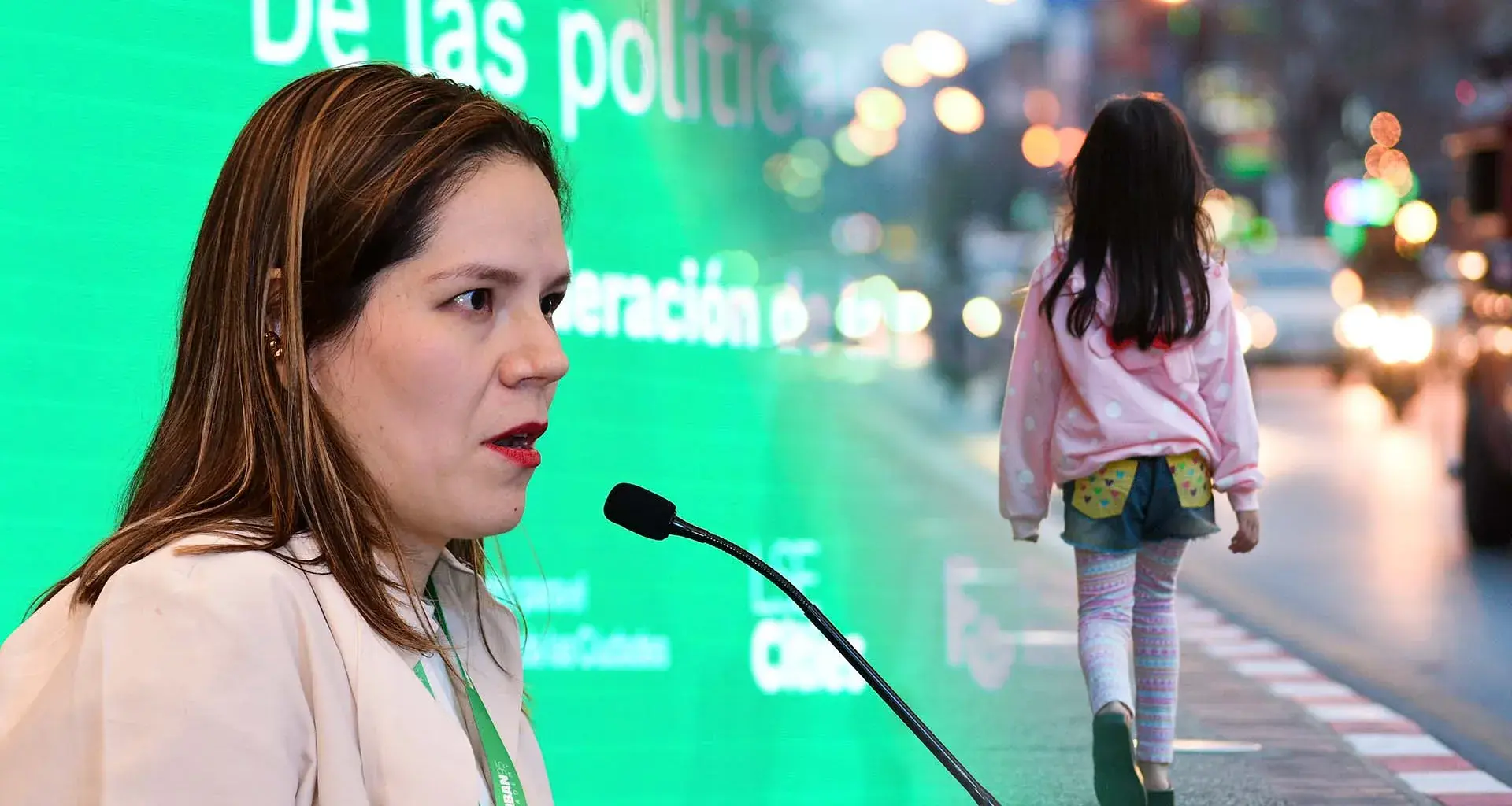
During her participation in the Cities that Care: from Policies to Details panel, Muxí pointed out that the transformation process of how a city is experienced is begun by observing the phenomena that occur within it.
Next comes planning, in which the current variables affecting the city are evaluated with a view to re-imagining the use of existing areas and taking advantage of what they already consist of to create new spaces.
“To improve the quality of life for children in cities, planning becomes especially exciting because elements that others would see as superfluous may represent a different and friendlier world for them”, Muxí noted.
Finally, there is the political action plan, which combines different strategies and specific initiatives for each project based on planning aimed at transforming a community’s social reality.
“Cities share the goal of building dignified environments for everyone”.- Nélida Escobedo.
The representatives of the ten cities that participated in the week-long stay at Tec’s Mexico City campus will now have follow-up and technical assistance to help them achieve their project goals when they go back to their native cities.
For Claudia Ledezma, program coordinator, the process has been as challenging as it has been meaningful:
“The limited stay was a major challenge in terms of coordination between organizations and academic teams, but it also brought enormous satisfaction to see how dialogue and collaboration between cities enriched the proposals and led to more robust solutions for early childhood”.
Finally, Nélida Escobedo underscored the commitment made to continue improving urban environments.
“Our goal is to provide any support needed to come up with proposals that will make it possible to put what was learned during the program into practice”, she concluded.
DON’T GO WITHOUT READING:
Seleccionar notas relacionadas automáticamente
1
Category:
Related stories