
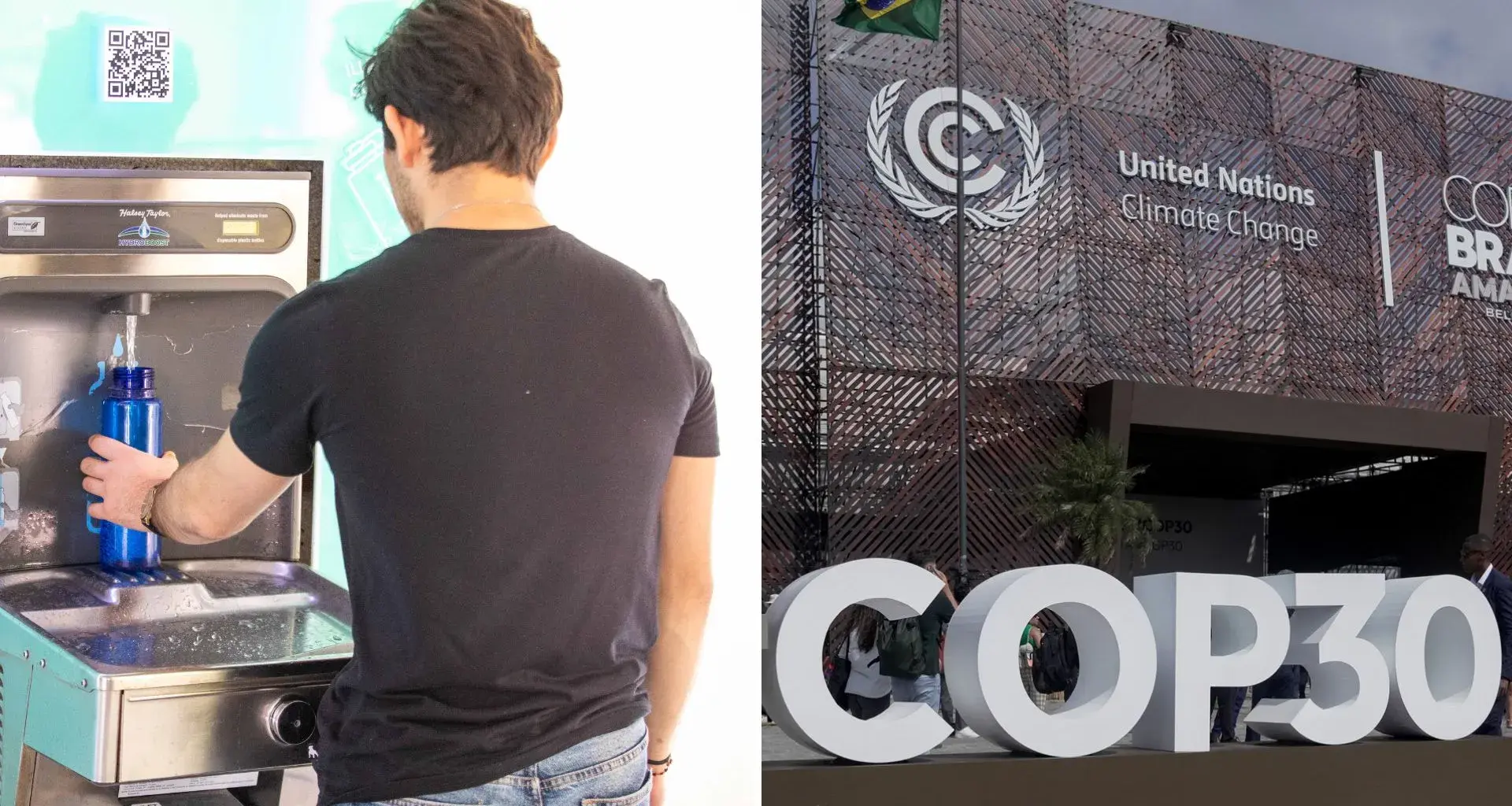

Ruta Azul’s achievements are to be presented at COP30, the climate change summit to be held from November 10 to 21 in Brazil.
Through the Ruta Azul (Blue Route) initiative, which has conducted over seventy projects in fifty areas since 2021, Tec de Monterrey has focused its efforts on sustainability and actions to combat climate change.
This is the name of the Tec’s Sustainability and Climate Change Plan for 2025, a document that sets out the institutional strategy and goals to be achieved in terms of sustainability and climate action.
Since the creation of Ruta Azul, the Tec has participated annually in the Conference of the Parties to the United Nations Framework Convention on Climate Change (UNFCCC), also known as the Conference of the Parties (COP), the world’s most important climate change forum.
This year, the institution is participating in the 30th edition of the Conference of the Parties (COP30) on climate change to share the actions it is taking as a university in the areas of sustainability and climate action through Ruta Azul.
COP30 will be held from November 10 to 21 in Belém, Brazil.
The principal achievements of Ruta Azul since its inception
Since its creation, Ruta Azul has involved students, teachers, researchers, staff, administrators, graduates, and external partners to achieve the goal of building a sustainable future by adopting a proactive culture to deal with the climate emergency.
Climate action through Ruta Azul, which will be updated for 2030, is a priority for the Tec.
The following is a presentation of some of Ruta Azul’s most noteworthy achievements:
Implementation of the STARS method
STARS (Sustainability Tracking, Assessment, and Rating System), a transparent evaluation framework developed specifically for universities created by AASHE (Association for the Advancement of Sustainability in Higher Education), was integrated in 2023.
STARS was adopted as a Ruta Azul strategic indicator to gauge progress in sustainability across the Tec’s various campuses and facilities according to the following classification (from highest to lowest): platinum, gold, silver, bronze, and report.
Sixteen Tec campus classifications were announced in 2025: the Monterrey campus obtained gold certification, making it the highest-ranked campus in Latin America and the only one in Mexico to receive a gold rating.
The other fifteen campuses achieved silver certification. The campuses in question are: Guadalajara, Querétaro, Puebla, Mexico City, Santa Fe, State of Mexico, Toluca, Sonora Norte, Chihuahua, Aguascalientes, Laguna, Ciudad Juárez, León, San Luis Potosí, and Sinaloa.
International ranking results
+ THE Impact Ranking 2025
The Tec was ranked 101-200 in the Times Higher Education (THE) Impact Ranking 2025, which evaluates universities’ progress towards the UN Sustainable Development Goals.
It also tied for first place regionally in Latin America and Mexico with other institutions.
* QS World University Rankings: Sustainability 2025
Tecnológico de Monterrey ranked 265th worldwide (top 15%), 69th in Latin America, and second in Mexico.
QS Sustainability provides information concerning educational institutions’ commitment to sustainability by assessing their social and environmental impact and governance, as well as any research they have conducted targeting sustainable development.
Elimination of single-use plastics
A commitment was made in April 2023 to reduce the use of plastic bottles and disposable plastics on Tecnológico de Monterrey campuses.
To achieve this, a project called “Goodbye to single-use plastics” was created with three goals in mind:
- Eliminate the use and sale of water in plastic bottles at all events and cafeterias operated by the Tec.
- Implement a circular system which, in the first year alone, enabled a 50% reduction in the use of disposable items in cafeterias operated by the Tec.
- Work progressively with suppliers and dealers to share the same sustainability goals.

Achievements of Ruta Azul’s six pillars
1. Culture of sustainability
The first asynchronous training program aimed at institution faculty and staff was launched with the goal of promoting a culture of sustainability, thereby enabling Tec community members to become agents of change to address the climate crisis.
2. Outreach
- Obtaining NGO observer status at the COP
A number of different delegations have represented the Tec in Climate Change COPs since 2021. In 2024 it became the only Mexican university to be given observer organization status.
3. Mitigation
- The Tec has achieved a 49% reduction in greenhouse gas emissions.
- 70.5% of energy consumption is now from renewable sources.
- It reduced water consumption by 14.65%.
- 22.13% of water consumption comes from recycled treated water.

4. Adaptation
The most striking achievements have been the review and update of sustainability and climate change adaptation standards for new buildings, the update of the national tree inventory, and the implementation of the program for diagnosing and identifying current risks.
5. Education
The inclusion of climate change in all of its 2019 undergraduate syllabuses is one of the most noteworthy achievements.
Also, the inclusion of sustainable development as one of the principles behind its 2026 syllabus design and integration of this as a central element in designing cross-cutting competencies for 2026 syllabuses.
6. Research
Support for five applied research projects from three National Schools using campuses as living laboratories to deal with challenges involving water, waste, and sustainable mobility.
The Tec at COP30
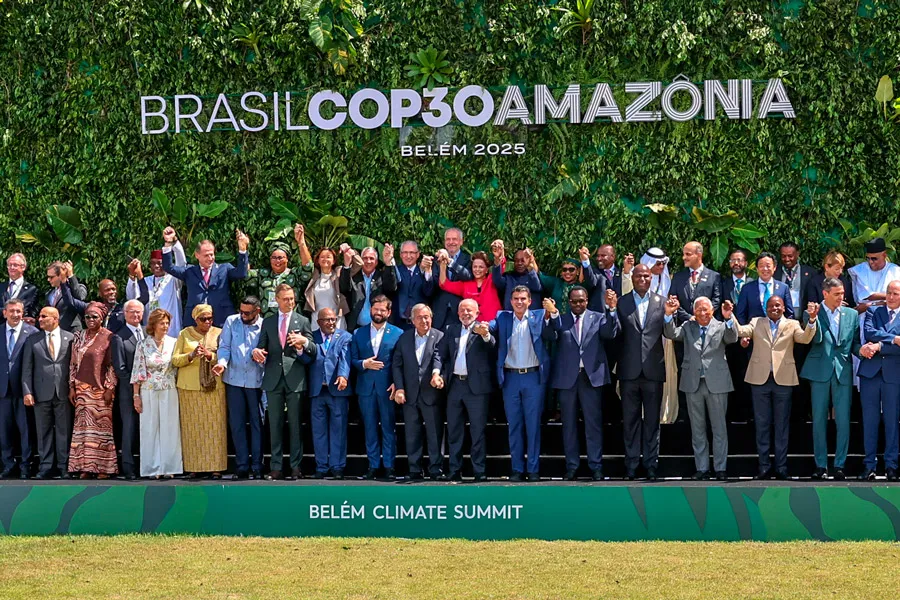
The Tec’s goal at COP30 is to be a leading university in sustainability and climate action (in both academic and research work), community initiatives, as well as liaison and collaboration with other universities, educational institutions, and other sectors of society.
This year, the Tec will be represented by one of the strongest delegations ever with the participation of:
- Juan Pablo Murra, Rector of Tecnológico de Monterrey
- Roberto Íñiguez, Executive Vice Rector of Academic Affairs and Faculty
- Paola Visconti, Director of Sustainability and Climate Action
- Ulrick Oliver Noel Solís, Nacional Director of the Eugenio Garza Lagüera Institute of Entrepreneurship (IEEGL)
- Daniel Mullen, Head of Extraordinary Academic Talent
- Ángel Gustavo López, Associate Director of the Regional Department of Political Science and International Relations (RI y CPECSG)
- Yoshiko Sakai, Acceleration and Impact Manager (IEEGL)
- María Enríquez, Portfolio Creator, School of Humanities and Education
- Valeria Soto, Sustainability and Climate Action Project Leader
- María Fernanda Rodríguez, Sustainability Secretary of FETEC Monterrey (Tec student association)
- Mónica Belén Hernández, researcher and PhD student at EGOB (Public Policy)
- Adrián Cerezo, Global Visiting Faculty at the Center for Early Childhood, Marshall Islands negotiator
Paola Visconti, Director of Sustainability and Climate Action, said that this participation is a great opportunity to demonstrate the Tec’s leadership in mobilizing climate action and the progress that has been made.
“It’s a wonderful opportunity to work with our closest allies to demonstrate the role that universities play in mobilizing climate action, not just individually, but also collectively,” said Visconti.

Higher Education for Climate Action Pavilion
At COP30, Tec de Monterrey, the State University of Campinas (Unicamp), and fourteen other universities will make up the Higher Education for Climate Action Pavilion.
Its goal is to show how universities contribute to climate action implementation through education, research, innovation, community engagement, and institutional leadership.
This pavilion will hold discussions, panels, and debates to highlight the fundamental role of higher education in advancing climate action and sustainable development.
The pavilion is expected to host over fifty events during COP30.
Worthy of mention among these events is the panel discussion entitled “The importance of cross-sector dialogue to achieve ambitious climate action: Mexico’s NDC 3.0” with the following participants:
- Andrea Hurtado, General Director of Climate Action Policies (SEMARNAT);
- Juan Pablo Murra, Rector of Tecnológico de Monterrey
- Roberto Íñiguez, Executive Vice Rector of Academic Affairs and Faculty
- Paola Visconti, Director of Sustainability and Climate Action
Ruta Azul has reached out to over a hundred universities to coordinate this project.
An effort will be made to get in touch with Tec graduates participating in the COP to find out about the work they are currently engaged in and to explore ways of collaborating with them to intensify the Tec community’s climate action efforts.
What is the COP?
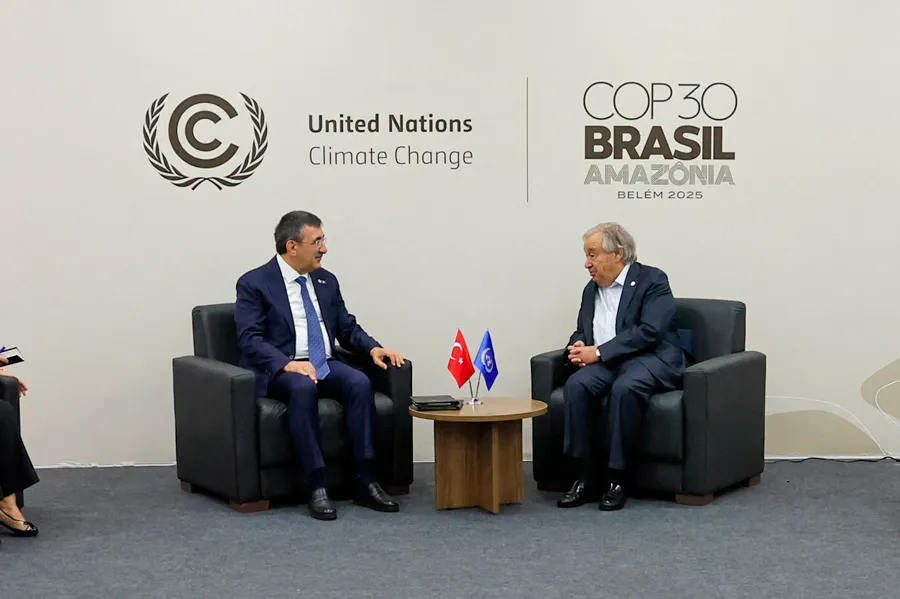
COP30 is the 30th Conference of the Parties to the United Nations Framework Convention on Climate Change (UNFCCC).
Countries (the Parties) meet annually at this forum to negotiate agreements aligned with the Convention’s objective of limiting the effects of climate change and greenhouse gas emissions.
This year, the event’s main theme is the presentation of the new Nationally Determined Contributions (NDCs); in other words, countries’ new climate plans.
In addition to being a venue for negotiation, the COP has become the world’s most important climate change forum and serves as a space for multi-sectoral dialogue and collaboration.
Pavilions bring together a significant number of civil society stakeholders, such as NGOs, universities, companies, and activists who seek to advance climate action collectively through partnerships, projects, climate commitments, and initiatives.
ALSO READ:
LEE ADEMÁS:
Notas Relacionadas
Seleccionar notas relacionadas automáticamente
0
Category:
Related stories