
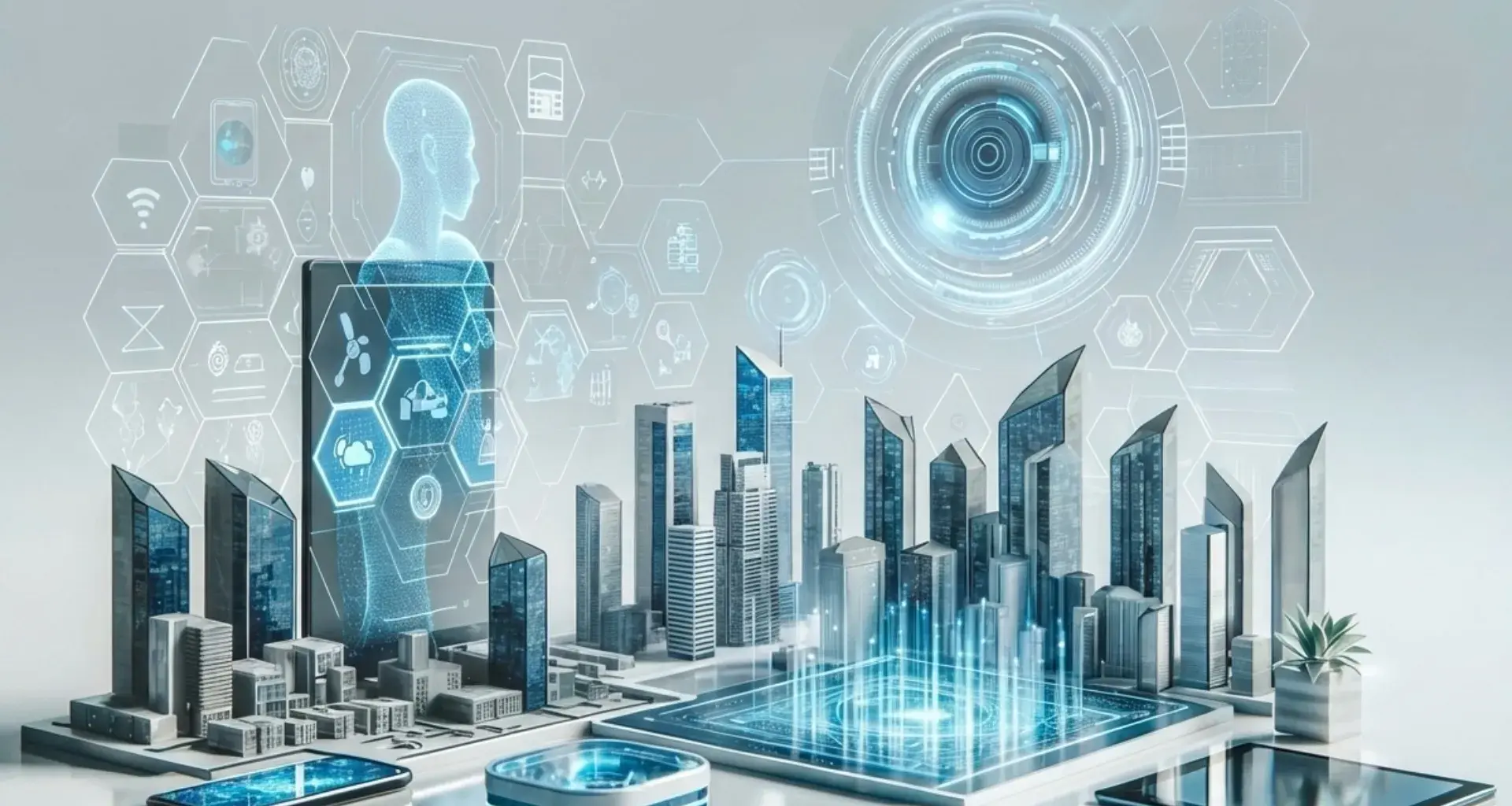

Artificial intelligence, self-driving vehicles, and cybersecurity are some of the technologies shaping the landscape for 2026.
Self-driving vehicles, sustainable infrastructure, and cybersecurity are emerging as some of the technological trends that will set the course for the coming year.
This was stated by Irving Hidrogo, Director of Educational Artificial Intelligence at Tec de Monterrey, who said that the economic investment seen in recent years has made all these developments possible.
While 2025 was a year of great discovery and learning thanks to artificial intelligence, it is noteworthy that governments, institutions, and individuals will now take action to utilize these tools.
“We’ll have a year full of changes, a year where technology will be at the disposal of human beings,” he said.
Hidrogo also shared his vision of the future of humanity and how, despite advances, we must seek areas where we as humans can continue to contribute significant value.

Artificial intelligence: The trend that will continue to lead the way
The director said that artificial intelligence will continue to be the most influential technological trendheading into 2026, not only because of its rapid evolution, but also because of the change in the way it will begin to be integrated into decision-making and the physical world.
Among the main developments that will be consolidated, he highlighted the advancement of agentic artificial intelligence (Agentic AI), a new generation capable of planning, searching for information, comparing, and executing actions on its own to achieve a goal.
Another key transformation will be Embodied AI, that is, artificial intelligence integrated into physical objects, where it ceases to be solely software and is incorporated into hardware, such as humanoid robots.
“Artificial intelligence is beginning to move beyond the screen and into the physical world,” he said.
He also emphasized that this transition will mark a turning point in the relationship between humans and technology, as AI will not only assist with information, but will also perform specific actions in shared spaces.

Self-driving transportation: Vehicles that already drive themselves
Self-driving transportation will cease to be a futuristic promise and become an everyday experience in the coming years, Hidrogo said.
The specialist pointed out that driverless car services developed by companies such as Waymo are already operating in cities such as San Francisco in the United States.
In these vehicles, the car arrives without anyone at the wheel. Users can request a ride from an app—similar to a ridesharing service—set the temperature, play Spotify playlists, and modify the route in real time.
“These systems have a large number of sensors that constantly analyze data to make decisions and reduce accidents,” Hidrogo explained.
Although it will be several years before this type of transport becomes widespread, the specialist predicted that its adoption will grow in 2026 and, as the number of self-driving vehicles on the road increases, they will be able to communicate with each other to maximize road efficiency.

Self-driving transportation: Logistics that move on their own
For the leader of Educational Artificial Intelligence, self-driving transportation beyond driverless cars is already transforming the way goods are moved on a global scale.
“We’re already seeing self-driving not only in private vehicles, but also in ships and land freight transport,” he said.
This technology allows for longer operating hours, optimized routes, and reduced human error, resulting in greater efficiency for global distribution.
By not accounting for fatigue or shifts, self-driving systems can maintain continuous and more predictable operations.
However, the challenge will be to strike a balance between efficiency, economic development, and new job opportunities in an increasingly automated mobility ecosystem.
“We’ll have a year full of changes, a year in which technology will be at the disposal of human beings".
Sustainable infrastructure and green technology
According to Hidrogo, sustainable infrastructure and green technology will be key drivers of technological development in 2026.
“Today, we’re not only talking about polluting less, but also about how technology can help us repair some of the damage we’ve already caused,” he said.
He also said that the focus is no longer limited to reducing the environmental footprint, but rather to developing solutions that will restore and regenerate ecosystems affected by decades of overexploitation.
“In 2026, we’ll see more technologies designed to coexist with the planet, not to exhaust it,” he said.
He also highlighted that hydrogen fuel cells, biofuels, and new energy storage systems are beginning to gain relevance in different productive sectors, promoting cleaner and more efficient energy models.

Cybersecurity: Life led in the cloud
For Hidrogo, cybersecurity will be one of the most critical trends heading into 2026, driven by an increasingly hyperconnected society that is dependent on digital services.
This is because, following the pandemic, much of social, economic, and personal life migrated to online environments.
“The cloud is no longer just a tool; it’s the space where much of our identity lives today,” he said.
This structural change brings new risks, as the greater volume of information and online activities also increases opportunities for fraud, data theft, and digital attacks.
Hidrogo warned that emerging technologies such as artificial intelligence and quantum computing can be used both to protect systems and to compromise them, accelerating attack capabilities.
“Cybersecurity is no longer a technical issue; it’s become a basic requirement of digital life,” he said.
Therefore, he anticipated that governments, companies, and institutions will have to strengthen their protection strategies, not only through technology but also through digital education, ethics, and prevention.

The Tec’s commitment to responsible adoption
Faced with the rapid advancement of emerging technologies, Hidrogo said that Tec de Monterrey is aware of the challenges facing society and the need to understand these tools before implementing them.
“It’s not just about jumping on the technological bandwagon but doing so judiciously, understanding its scope, risks, and benefits,” he said.
To this end, the institution has specialized centers that promote research, analysis, and training in emerging technologies, such as the Artificial Intelligence Hub and the Data Center at the School of Engineering and Sciences, as well as the Digital Transformation Center at the School of Business.
In addition, the Tec community will be able to continue exploring these topics through institutional events next year, such as: the IFE Conference, incMTY Festival 2026, AI Summit 2026, and Cybersecurity Week.
ALSO READ:
Seleccionar notas relacionadas automáticamente
1
Category:
Related stories