
The CES 2026 technology fair showcased technologies that can transform how we learn and teach in the classroom of the future.
The Consumer Electronics Show (CES), considered the world’s largest technology showcase, left some clues as to where education might be headed, said Úrsula Saldívar, Director of Emerging Technologies at Tecnológico de Monterrey.
Robots, artificial intelligence glasses, and devices capable of recording how we learn were the innovations Saldívar observed during her visit to CES.
CES is the annual global event where gadgets and trends that will set the course for innovation are presented.
“It’s important to attend these events to learn about emerging technologies and anticipate the future to see how we could use them in our interaction with our students”.
Saldívar identified several trends, from conversational robots to artificial intelligence glasses, with high potential for education. These are the four most relevant:

1. Physical AI: When artificial intelligence enters the real world
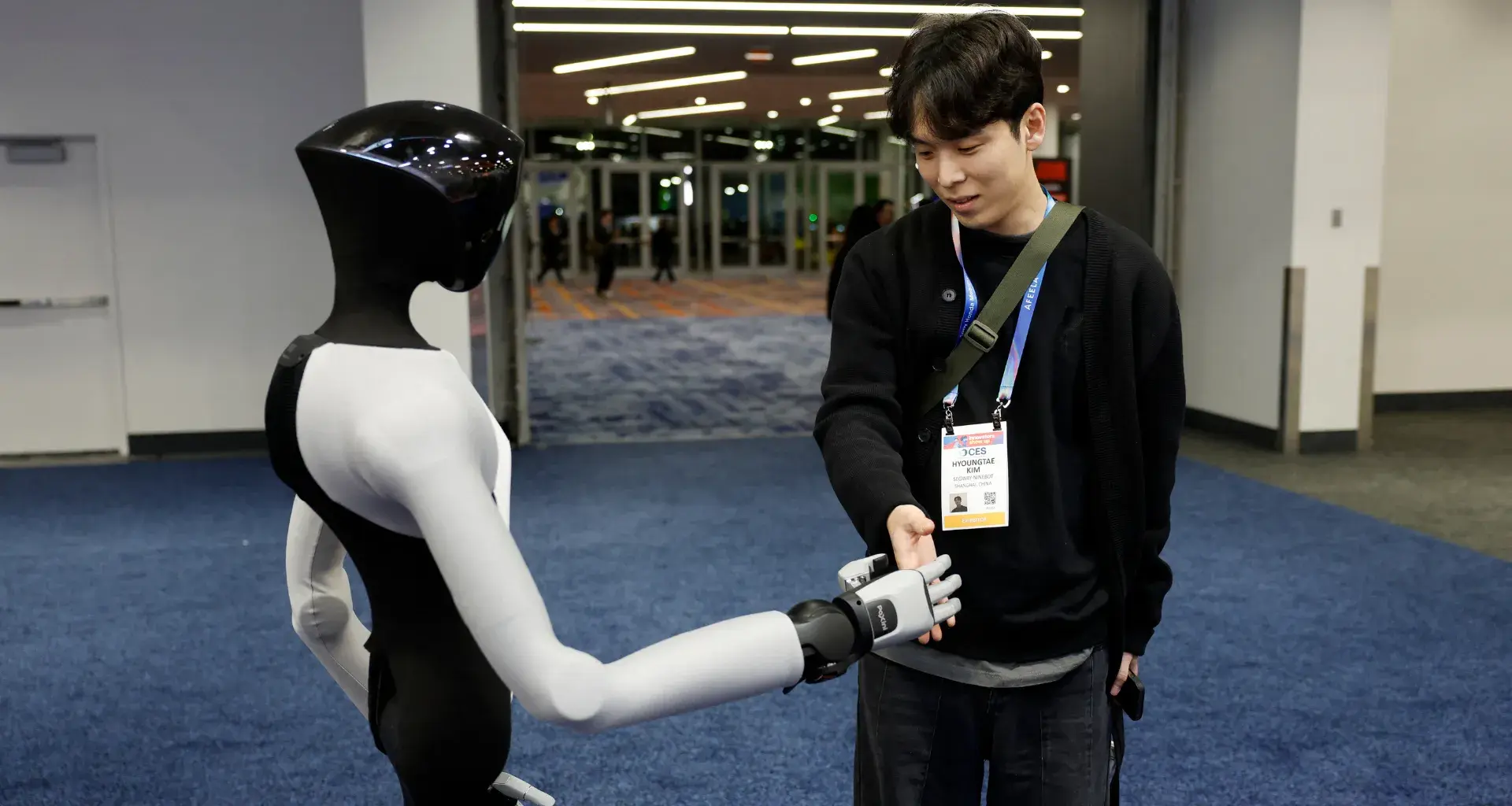
One of the major trends at CES was physical AI, i.e., artificial intelligence integrated into tangible objects.
“These are systems that can see, decide, and act through tangible things such as robots, sensors, or wearables”.
At CES 2026, this materialized in medical, domestic, and conversational robots.
“There were medical robots that performed surgeries, robots that could already perform fine movements, and robots that could even hold a conversation".
Among the most talked about were Atlas, from Boston Dynamics, integrated with Google models, and Chloe, from LG, a “Rosey the Robot” capable of performing
How can they be applied to education?
For Saldívar, these robots open up a new form of active learning.
“We can use robots for educational purposes, allowing them to adjust their behavior according to how students program them.
“The educational value is learning based on experimentation, learning by doing through trial and error”.
Furthermore, according to the specialist, these environments allow for the development of critical and ethical thinking, in which biases can be discussed and ethical dilemmas simulated.

Emotional assistants and smart tutors
This year, CES showcased everything from pet-like robots to holographic assistants.
“There were puppies and kittens that, if you put them on your chest, would synchronize with your heartbeat. They connect with natural language models, accompany you, and engage in conversation".
Use in the classroom
“They could tell you how you’re doing in your classes, what homework you have... function like a coach who helps you study".
In early childhood, they can even read books and ask children questions.

2. AI and augmented reality glasses: The classroom becomes an interface
Another key trend was smart glasses with integrated displays and AI capabilities.
“We tried out the Meta Displays, which have a built-in screen that allows you to view slides, teleprompters, simultaneous translations, and even subtitles.”
These lenses are controlled by a neural band that detects movements and nerve signals.
“You don’t even speak; you just move your hands to open screens and take a photo.”
The new XR glasses are no longer heavy headsets, but portable personal displays.
Companies such as TCL (RayNeo Air 4 Pro) and Xreal presented models with higher resolution and a larger field of view.
What is changing in education?
The experience opens up new possibilities for inclusion, experimentation, and communication.
“Imagine a laboratory where you can take self-guided tours that teach you how to use materials safely.
“Simultaneous translation is a major step forward for inclusion.”
In addition, “A student can be talking about Rome and at the same time see historical content in their own space. This makes learning much more immersive and active.”
“It’s important to learn about emerging technologies so we can anticipate the future.”

3. Wearables and biometrics: Measuring how we learn
CES also showcased a new generation of AI-connected wearables.
Wearable gadgets are portable electronic devices, such as watches or bracelets, that are worn and that monitor, record, and facilitate everyday activities using smart technology.
“Our biometric data is going to become increasingly important. We’re going to become a source of information to improve what we do".
Use in education
“We can measure attention levels and identify which moments in class generate the most engagement in real time”.
This opens the door to classes that dynamically adapt to students’ cognitive and emotional responses.
4. Quantum computing: Invisible infrastructure
Although it is not a gadget, quantum computing was one of the big bets at CES.
“It’s a type of computing that performs calculations which today’s computers can’t do, accelerating artificial intelligence algorithms.”
This will enable much more accurate educational, financial, and scientific models.

Why should the Tec be at CES?
For Úrsula Saldívar, the key to the Tec’s visit to CES is not just to see gadgets, but to anticipate.
“It’s important to learn about emerging technologies in order to anticipate the future to see how we can use them to interact with our students.”
“Imagine having your screens inside your glasses. You can be 100% present in a laboratory while your vision expands.”
Rather than adopting technology because it is fashionable, it is about educating students for a world where robots, AI, biometrics, and augmented reality will be part of their everyday professional and social lives.
“We need to develop both knowledge and critical thinking skills for the future that lies ahead.”
About CES 2026
CES was held from January 6 to 9 in Las Vegas, Nevada, and is considered the most influential and recognized consumer technology event in the world, held annually by the Consumer Technology Association (CTA).
Over time, it has established itself as the key venue where international manufacturers, startups, investors, media, and industry specialists come together to learn about, showcase, and launch the latest innovations in consumer electronics.
The first CES was held in New York in 1967.
MORE ABOUT EDUCATIONAL TECHNOLOGY:
Seleccionar notas relacionadas automáticamente
1
Category:
Related stories