
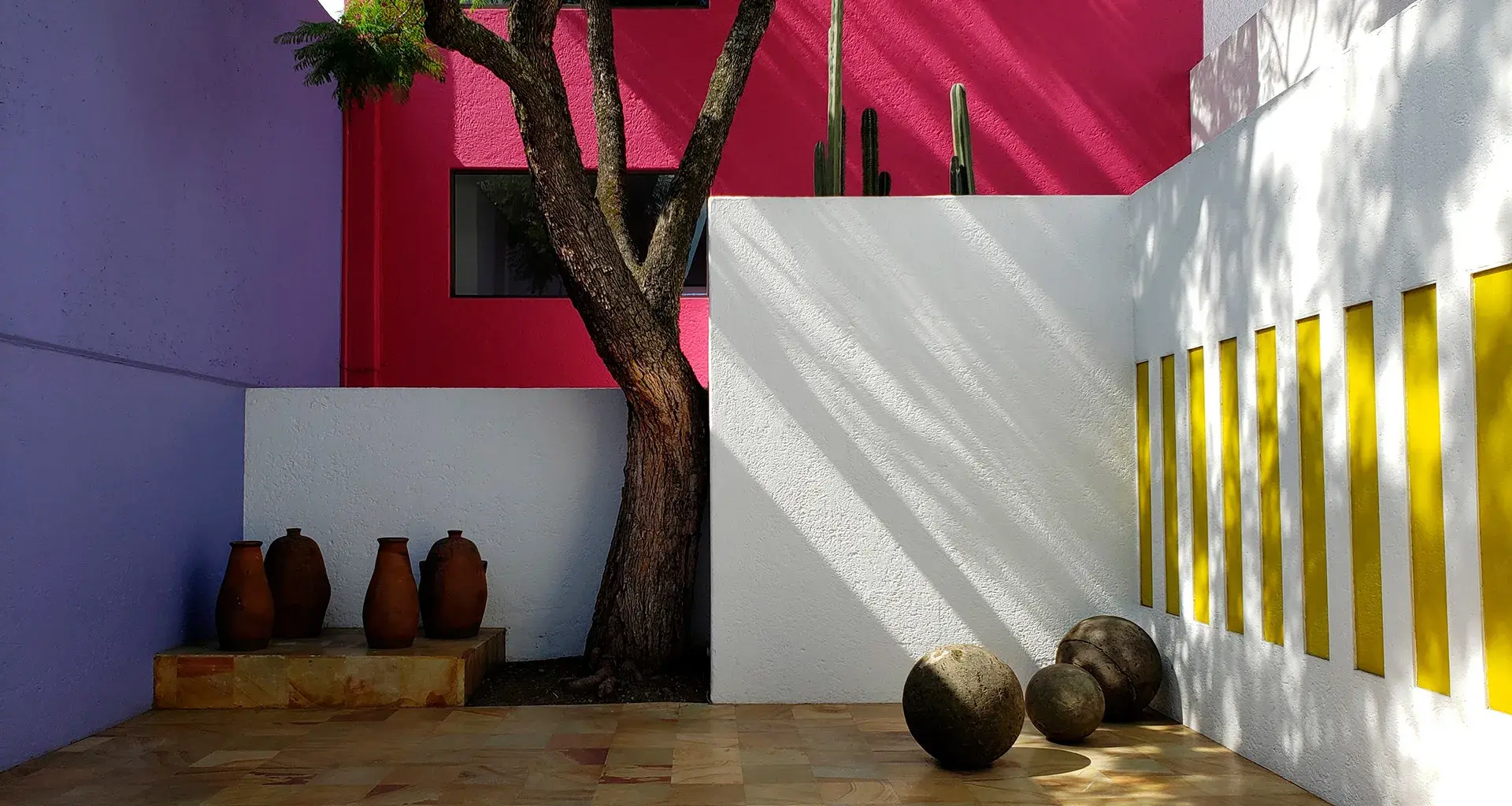

Architect Luis E. Carranza shared his thoughts on the work and contributions of Mexican architect Luis Barragán and spoke about his most iconic works.
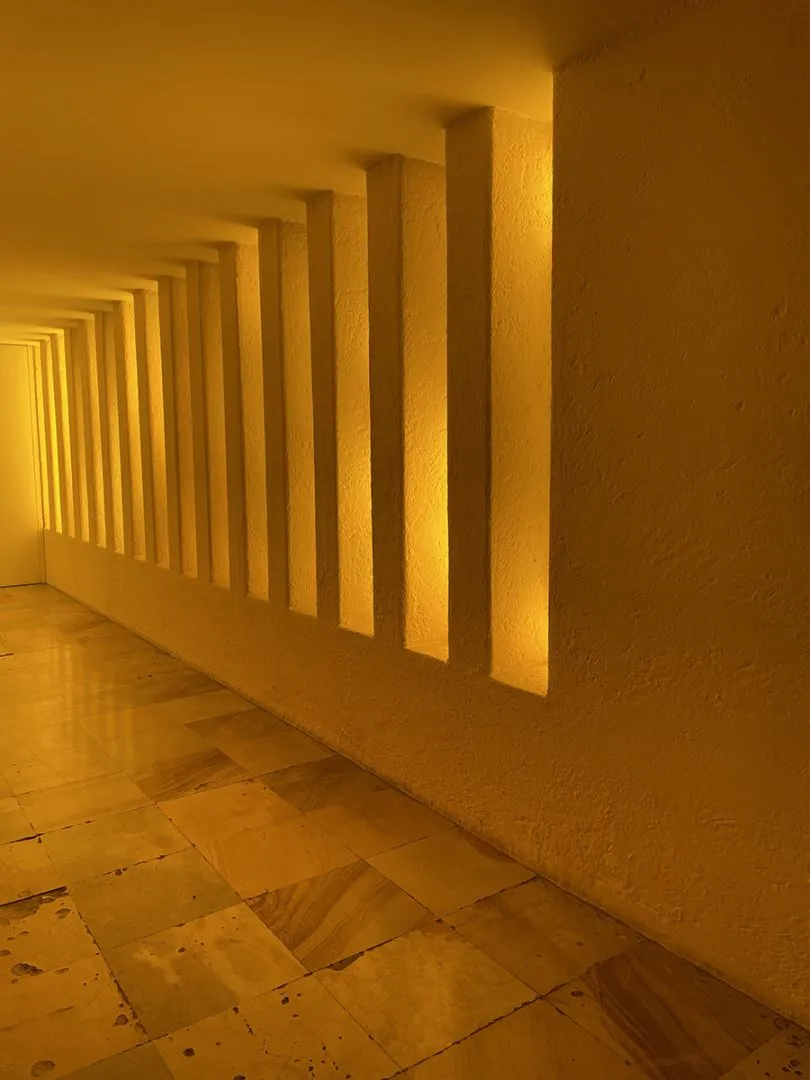
Light, color, space, and diagonals are what make Luis Barragán’s houses unique, said architect, historian, and experimental filmmaker Luis E. Carranza.
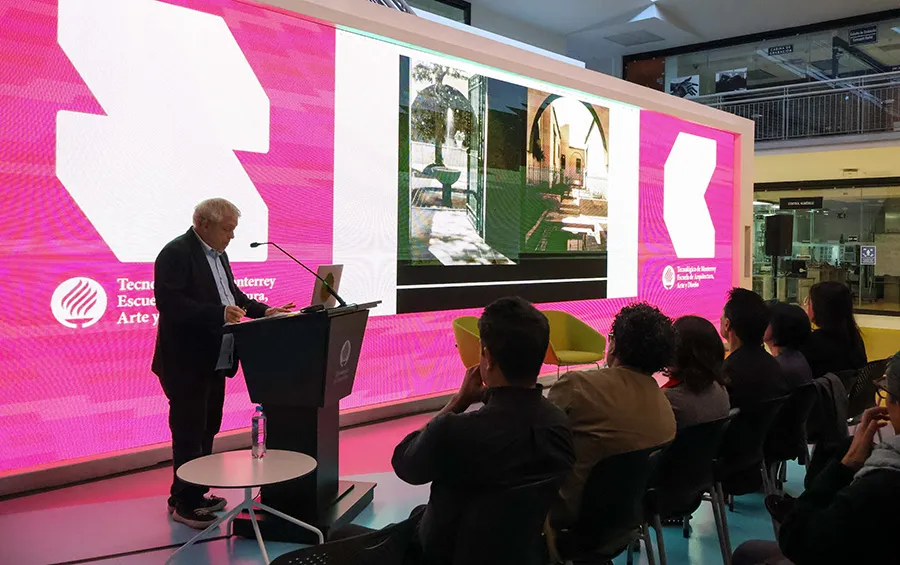
Carranza, who is also a professor at Roger Williams University, presented this analysis as part of Tec de Monterrey’s Luis Barragán Symposium in his lecture “Reflections on the Avant-Garde: Luis Barragán and the Echo Chamber,” held at the Mexico City campus.
He offered examples of gardens, walls, and details that transform each space into a unique architectural experience, highlighting how the use of color, light, and diagonals transforms each space into an experience that awakens emotions and senses.
“It’s an art that forces us to see things, that forces us to focus and understand them, and doesn’t allow us to pass through without noticing them,” said Carranza, echoing Russian critic Vitoshlovsky.
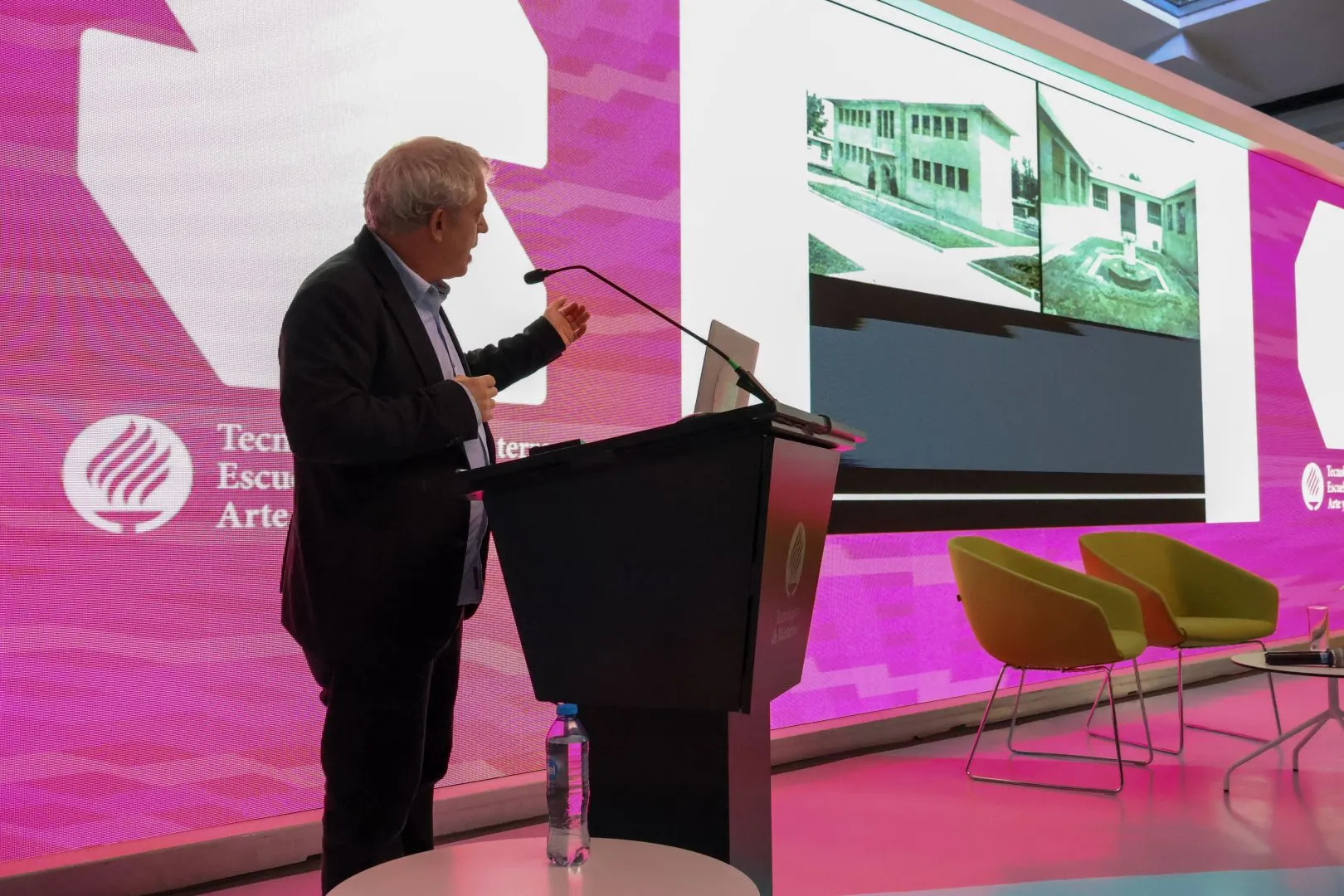
He pointed out that the relationship between elements, space, and forms becomes evident in Barragán’s work.
“These types of juxtapositions, how the elements are used, not only on San Jerónimo Avenue, but also in the Pedregal neighborhood (Mexico City), invite us to perceive the world in a deeper way.”
Carranza explained that this mixture of elements, similar to Joseph Cornell’s boxes where objects and shapes interact with each other, seeks to stimulate the viewer’s imagination and creativity.
He emphasized that these tensions and relationships are part of the personal stamp that Barragán left on Mexican architecture.
Barragán’s international influences
According to the speaker, Barragán was also inspired by architects such as Frank Lloyd Wright from the United States and Richard Neutra from Austria, especially in the way they connected interiors and exteriors and organized diagonal paths.
“One always thinks of Wright, who guides you with light. Follow the light, and you’ll get there.”
Light and the layout of paths are also central to Barragán’s work, he said.
“His architecture of movement reflects current concerns and experiments, revealing new tensions and relationships between elements.”
A new interpretation of modernity
Carranza, who is also an experimental filmmaker, invited viewers to see Barragán’s modernity in a different light, blending Mexican tradition with more modern and international ideas.
“This is an interpretation based on a rediscovery and reconceptualization of modernity. A modernity that we want to unearth beyond what is traditionally said about Luis Barragán.”
“To understand his work, you have to be in it, move around it, smell the plants, hear the spaces... All of that makes the experience more powerful.”
He emphasized that Barragán’s architecture is not limited to aesthetics. It needs to be experienced and explored.
“To understand his work, you have to be in it, move around it, smell the plants, hear the spaces... All of that makes the experience more powerful.”
Iconic houses and gardens by Luis Barragán
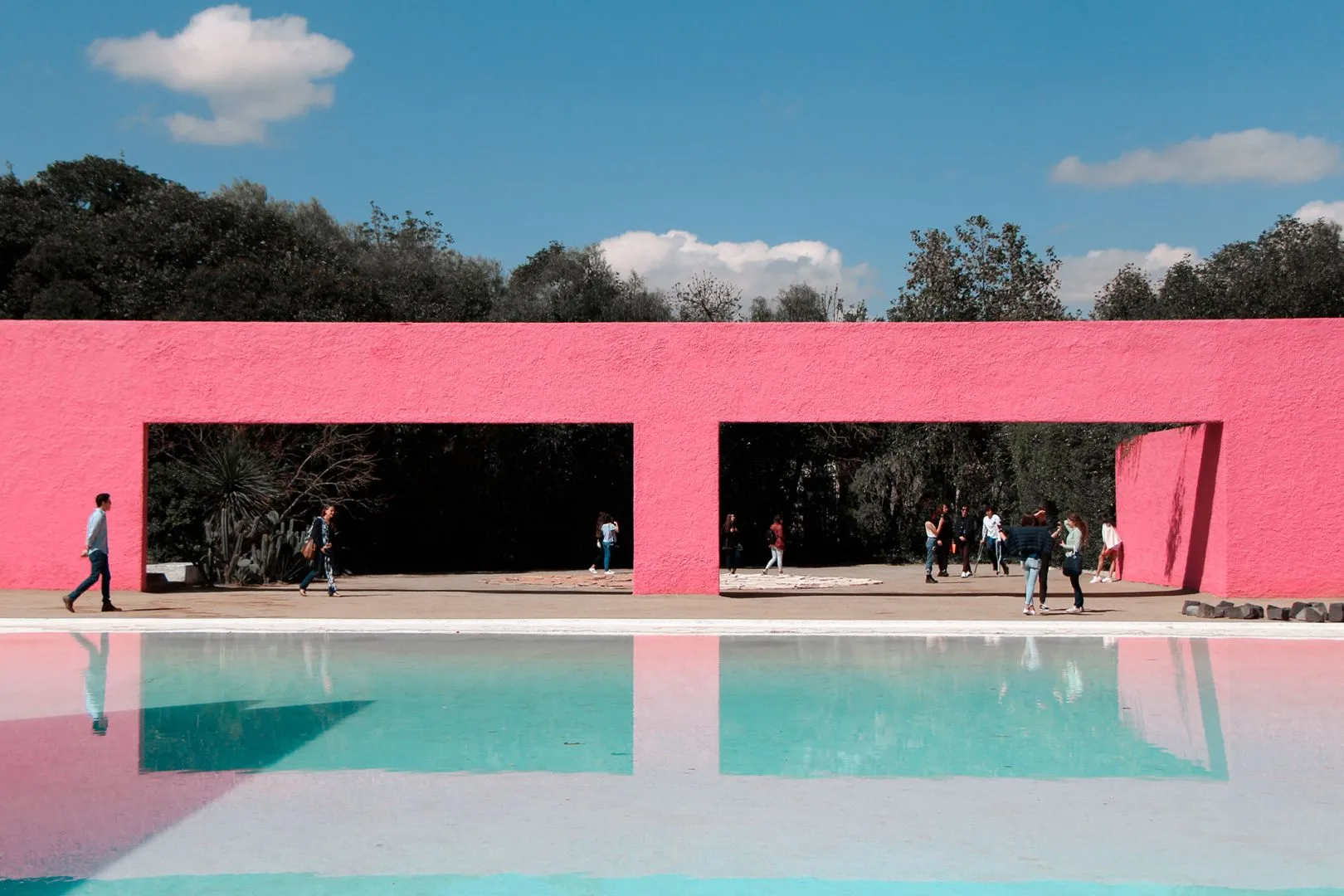
Luis E. Carranza presented examples of houses that show how Barragán organized space, light, and gardens to create unique experiences, mentioning the following:
-Casa Prieto López
He explained that his design integrates part of the building into the slope of the land, while the interconnected living rooms, dining rooms, and breakfast areas offer views of the spacious gardens.
In this house, diagonal paths create a dynamic movement that connects different spaces.
“You enter the main space, where the door is, then move diagonally up the stairs, and arrive at another space. The diagonal nature of the path shapes an experience of movement and light.”
The fireplace and points of natural light visually guide you through the path, while the corners of the rooms reveal Barragán’s control over each space.
“Barragán always intends to maintain control of the interior. He doesn’t destroy the house, like Wright, but rather exercises a very particular control over space.”
Barragán preserved the native plants of the area and worked around the volcanic rock, hard as iron, that characterizes the Pedregal area.
- Casa Gálvez
For architect Carranza, in Casa Gálvez Barragán combines modernity with historical references and local traditions, creating continuity and depth in every room of the house, which was built in 1955 in San Ángel, in the west of Mexico City.
“You move diagonally through the rooms... There’s a strategically placed biome that marks the path, and the light leads a way that invites you to move forward.”
- Jardines del Pedregal
The Jardines del Pedregal neighborhood shows how Barragán integrated nature into his architecture. In his 1952 lecture, Gardens for the Environment, the Mexican architect remarked: “Bach said that the garden contains the universe within itself. If the universe is in the garden, can we use it as a model to rethink the house?”
Carranza emphasized that the spaces in this residential area are settings for creativity. “These gardens invite us to perceive the world in a deeper and different way.”
The neighborhood was built on lava rock and marketed in large lots designed as gardens. Its main design was carried out by some of the most prominent Mexican architects of the time, such as Max Cetto and Luis Barragán.
More about the Luis Barragán Symposium
Carranza’s lecture is part of the activities of Tec de Monterrey’s Luis Barragán Symposium, which since 2000 has brought together specialists to reflect on modern and contemporary architecture.
“This new Luis Barragán Symposium is proposed as a platform for thinking about architecture from its most essential values: the politics of space, care for the environment, commitment to the common good, and sensitivity toward land and people,” said Alessandra Chireddu, National Director of the Architecture program at the Tec.
She said that the symposium is establishing itself as an academic space that allows students to learn about the work of great architects and understand how their legacies continue to be relevant today.
After a 15-year hiatus, the symposium was relaunched in 2025 with international guests such as Sandra Barclay and Jean Per Cruz.
Luis E. Carranza, a specialist in Latin American architecture, associate adjunct professor at Columbia University’s Graduate School of Architecture, Planning, and Preservation, and visiting professor at Yale School of Architecture, shared his analysis of Luis Barragán’s work.
YOU CAN ALSO READ
Seleccionar notas relacionadas automáticamente
1
Category:
Related stories